
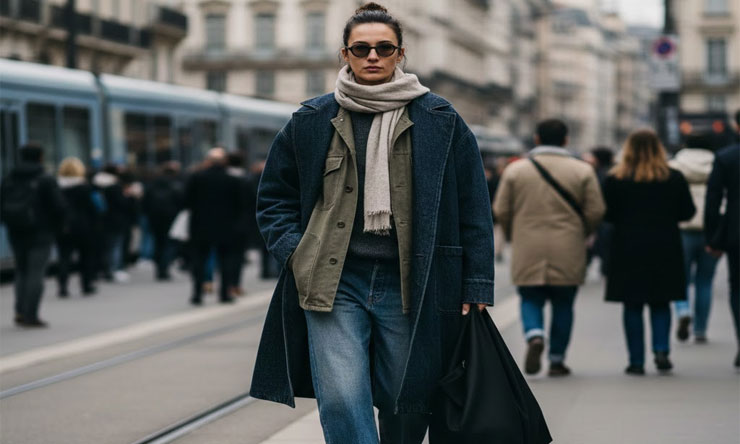
In an era where trends refresh faster than seasons and algorithms decide what looks “right,” personal style often feels like something we borrow rather than build. Clothes arrive with instructions—what to pair, how to wear, who it’s for. Somewhere along the way, style shifted from being an expression of inner grounding into a performance shaped by external approval. This is where the idea of style as armor, not costume, begins to matter.
Armor protects. Costume entertains. One is rooted in intention, the other in display. When style functions as armor, it supports the wearer’s sense of self in a noisy world. When it becomes a costume, it risks hollowing out that self, replacing authenticity with spectacle. Exploring this distinction is not about rejecting fashion or aesthetics, but about reclaiming agency in how we present ourselves—quietly, deliberately, and on our own terms.
Style as Self-Protection in a Performative World
Modern culture rewards visibility. Outfits are photographed, tagged, and ranked before they are even lived in. Under these conditions, clothing can easily become a tool for survival rather than expression. People dress to avoid judgment, to blend in, or to meet unspoken expectations tied to class, gender, profession, or online identity. In these moments, style functions less like armor and more like camouflage.
True armor, however, does not erase the person inside it. Instead, it reinforces boundaries. A well-chosen jacket, a pair of worn boots, or a consistent color palette can ground someone in their own narrative. These choices do not scream for attention; they quietly signal alignment. Armor is not about being untouchable, but about being intact.
When style is armor, it reduces friction between inner life and outer presentation. There is less anxiety about being “on trend” and more confidence in being appropriate to oneself. This is especially powerful in spaces that demand conformity. Armor does not always resist openly; sometimes it simply allows a person to exist without constant self-correction.
There is also an emotional dimension to this. Clothing carries memory and meaning. Items chosen for comfort, familiarity, or personal symbolism can create a sense of safety. In this way, style becomes a daily ritual of self-recognition. It says: this is who I am today, and I am prepared to move through the world as myself. You may also like: Pop Culture Nostalgia Escaping To The Past
Costume Culture and the Pressure to Perform
Costumes are designed for audiences. They exaggerate traits, flatten complexity, and rely on recognition. In digital spaces, costume culture thrives. Outfits are assembled not for lived experience but for how they read on screens. The goal is clarity, not depth: instantly legible aesthetics that fit neatly into trends or niches.
The problem with costume-driven style is not creativity, but dependence. When identity is too closely tied to a look, any change in trend can feel like a loss of self. People begin to chase coherence through constant updates, mistaking novelty for growth. Over time, this creates fatigue. Dressing becomes labor rather than pleasure, a task of maintaining relevance instead of expressing reality.
Costumes also encourage comparison. If style is about fitting a role, then there will always be someone playing it better. Armor, by contrast, has no competition. It is measured internally. The question shifts from “Does this look good?” to “Does this feel right?” That subtle shift can be liberating.
There is a deeper risk as well. Costume culture often rewards extremes, pushing people to perform versions of themselves that are louder, sharper, or more marketable than they truly feel. This performance can slowly distance individuals from their own instincts. Style becomes something done to the self, not with it.
The Quiet Power of Unstyle
Against this backdrop, unstyle emerges not as neglect, but as refusal. It is the decision to stop explaining oneself through clothes. Unstyle does not mean dressing without care; it means dressing without apology. It prioritizes coherence over coherence-with-trends, comfort over commentary.
Unstyle is often misunderstood as minimalism or indifference. In reality, it is deeply intentional. It strips away excess meaning imposed from the outside and returns clothing to its primary function: to serve the wearer’s life. Colors repeat. Silhouettes stabilize. The wardrobe becomes less of a rotating display and more of a toolkit.
This approach can feel radical because it resists visibility as a primary goal. Unstyle does not perform rebellion or conformity; it simply opts out of the cycle. In doing so, it allows identity to exist without constant reinforcement. The person is no longer dressed to be decoded.
Importantly, unstyle is not uniform. What feels like armor to one person may feel restrictive to another. The point is not the look, but the relationship to it. When style is armor, it adapts to the wearer’s needs across contexts—work, rest, movement, solitude. It does not demand reinvention to remain valid.
In the middle of a culture obsessed with signaling, choosing unstyle can feel like reclaiming silence. It creates space for presence. Instead of asking what the outfit says, the focus shifts to what the person is doing, thinking, or feeling. Style fades into the background, where armor belongs—supportive, reliable, and unnoticed.
Conclusion
Style as armor is not about hiding; it is about holding. It holds boundaries, values, and continuity in a world that encourages constant reinvention. When clothing becomes costume, it asks the wearer to perform. When it becomes armor, it allows the wearer to persist. Read also: Wearing Chaos Outfits That Break All The Rules
Reframing style in this way invites a slower, more honest engagement with appearance. It encourages choices rooted in lived experience rather than external validation. Whether someone leans toward bold expression or quiet repetition, the question remains the same: does this support who I am, or who I am expected to be?
In answering that question, many people find themselves drifting toward unstyle—not as an aesthetic trend, but as a personal ethic. It is the recognition that style does not need to speak loudly to be meaningful. Sometimes, its greatest strength lies in its ability to protect without distracting, to exist without performing, and to let the person inside move freely through the world.