For much of modern history, masculinity has been framed through a narrow set of expectations: strength without vulnerability, dominance over empathy, emotional restraint instead of openness. These ideals have been reinforced by media, social institutions, and cultural traditions that positioned men as providers, protectors, and authority figures. While such traits were often presented as universal and timeless, they were, in reality, socially constructed norms shaped by specific historical and cultural contexts.
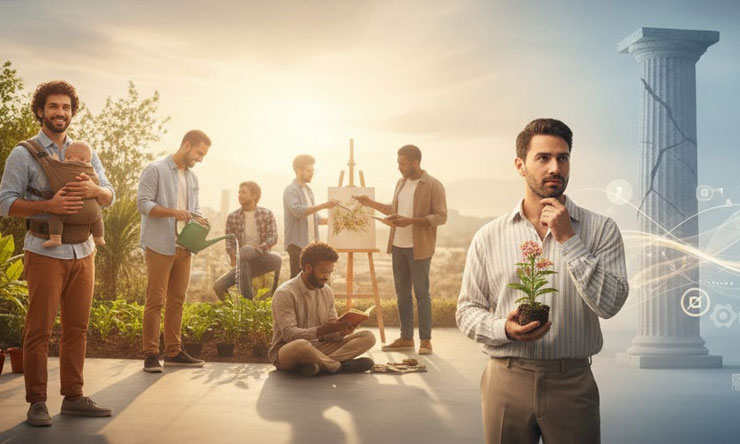
In recent years, however, a noticeable shift has been taking place. A growing number of men—especially among younger generations—are embracing what is often referred to as “soft masculinity.” This emerging expression of manhood values emotional awareness, gentleness, care, collaboration, and self-reflection without rejecting strength or responsibility. Rather than being a rejection of masculinity itself, soft masculinity represents an expansion of what it means to be a man.
The rise of soft masculinity has sparked debates across social media, popular culture, and academic circles. Supporters see it as a healthier and more inclusive model, while critics worry it weakens traditional roles or blurs gender distinctions. To understand why soft masculinity matters, it is important to examine how it emerged, how it reshapes identity and relationships, and what it reveals about broader cultural change.
Understanding Soft Masculinity in a Changing World
Soft masculinity does not imply passivity or weakness. Instead, it challenges the assumption that emotional distance and toughness are the defining traits of male identity. At its core, soft masculinity emphasizes emotional literacy—the ability to recognize, express, and manage feelings in constructive ways. It also values empathy, communication, and mutual respect, qualities historically coded as feminine but increasingly recognized as human strengths.
This shift has been influenced by several interconnected factors. First, mental health awareness has grown significantly. As conversations around anxiety, depression, and burnout become more open, many men are questioning the cost of suppressing emotions. Studies and personal testimonies alike highlight how rigid masculine norms can discourage men from seeking help, contributing to higher rates of stress-related illness and suicide. Soft masculinity offers an alternative that allows emotional expression without shame.
Second, changes in family and work dynamics have played a role. As dual-income households become more common and caregiving responsibilities are shared, traditional gender roles lose their rigidity. Men are increasingly expected to be emotionally present partners and parents, not just financial providers. This evolution encourages forms of masculinity that prioritize care, patience, and relational skills.
Popular media has also contributed to this transformation. Films, television series, music, and fashion increasingly portray male figures who are sensitive, introspective, and expressive without undermining their confidence or competence. These representations provide visible alternatives to hyper-masculine archetypes and help normalize softer expressions of male identity for wider audiences.
Soft Masculinity and Its Cultural Significance
The cultural impact of soft masculinity extends far beyond individual self-expression. It reshapes social expectations and influences how people relate to one another across genders and generations. One of its most significant contributions is the redefinition of emotional labor. When men are encouraged to engage emotionally, the burden of nurturing, listening, and caregiving is no longer disproportionately placed on women. This redistribution can lead to healthier, more balanced relationships. Related topic: Pop Culture Nostalgia Escaping To The Past
Soft masculinity also plays a role in reducing gender-based conflict. Traditional masculine norms often reward competition, dominance, and emotional suppression, which can escalate misunderstandings and reinforce power imbalances. In contrast, softer expressions promote dialogue, vulnerability, and cooperation. These qualities foster trust and reduce the pressure to perform rigid gender roles in social and professional settings.
In workplaces, this shift can influence leadership styles. Leaders who practice empathy, active listening, and emotional intelligence often create more inclusive and productive environments. As organizations increasingly value collaboration and adaptability, soft masculinity aligns well with modern professional demands. It challenges the outdated notion that authority must be expressed through intimidation or emotional detachment.
From a broader perspective, the rise of soft masculinity reflects a deeper transformation within global culture. It signals a move away from binary thinking about gender and toward a more fluid understanding of identity. By allowing men to embrace traits once considered incompatible with masculinity, societies open space for authenticity and psychological well-being. In discussions about equality and representation, culture becomes a living process rather than a fixed set of rules, shaped continuously by changing values and experiences. Worth reading: Why I Dont Know Is A Power Move
Challenges, Misconceptions, and Resistance
Despite its growing visibility, soft masculinity faces significant resistance. One common misconception is that it seeks to erase traditional masculinity altogether. In reality, it does not deny the value of strength, resilience, or responsibility. Instead, it questions why these qualities must exclude tenderness, vulnerability, or emotional depth. Soft masculinity is additive rather than subtractive, expanding the emotional and behavioral range available to men.
Another challenge lies in social backlash. Men who display softness may face ridicule or accusations of weakness, particularly in environments that strongly uphold traditional gender norms. These reactions reveal how deeply entrenched certain ideas about masculinity remain. The fear is often not about softness itself, but about losing familiar structures of power and identity.
Cultural and regional differences also shape how soft masculinity is received. In some societies, collective values and emotional expressiveness are already integrated into male identity, making the concept less controversial. In others, especially where masculinity is closely tied to authority and control, the transition can be more contentious. Understanding these variations is crucial to avoiding simplistic or universal narratives.
Importantly, the rise of soft masculinity does not occur in isolation. It intersects with movements for gender equality, mental health advocacy, and changing family dynamics. These intersections can create tension but also offer opportunities for dialogue and growth. When approached thoughtfully, soft masculinity can coexist with tradition while addressing its limitations.
Conclusion
The rise of soft masculinity marks a meaningful shift in how societies understand male identity. Rather than weakening masculinity, it humanizes it by acknowledging emotional complexity, relational responsibility, and personal authenticity. In a world facing social fragmentation, mental health challenges, and evolving gender expectations, these qualities are not luxuries—they are necessities.
Soft masculinity matters because it expands the possibilities of who men can be and how they can contribute to their communities. It encourages healthier relationships, more inclusive workplaces, and a more compassionate social environment. While resistance and misunderstandings persist, the growing acceptance of softer expressions of masculinity reflects a broader cultural evolution toward balance and empathy.
As conversations about identity continue to unfold, the importance of soft masculinity lies not in replacing one rigid model with another, but in allowing diversity, flexibility, and emotional honesty to thrive. In doing so, it reinforces the idea that strength and softness are not opposites, but complementary forces shaping the future of culture.