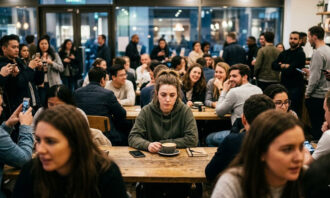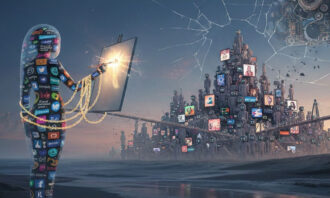
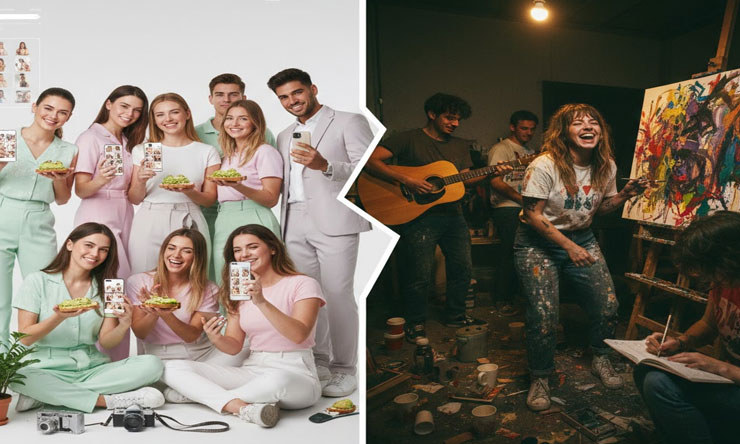
Scroll through any social media feed today and a pattern quickly emerges. Photos are color-coordinated, captions are carefully toned, personalities feel consistent across platforms, and even vulnerability appears polished. From influencers and brands to ordinary users, everything seems filtered—not just visually, but emotionally and ideologically. We live in an era of hyper-curation, where content is constantly refined, optimized, and adjusted for visibility, engagement, and approval.
This environment raises an unsettling question: is anything truly raw anymore? Authenticity is celebrated in theory, yet rarely left unedited in practice. Spontaneity exists, but often within strict boundaries shaped by algorithms and audience expectations. To understand whether “raw” still has a place today, we must examine how hyper-curation reshapes expression, identity, and trust in the digital age.
Hyper-Curation and the Performance of Authenticity
Hyper-curation goes beyond basic self-presentation. It is the continuous process of selecting, refining, and controlling how one appears across digital spaces. Unlike earlier forms of media, where curation was limited to professionals, today everyone is a curator of their own image. Profiles become portfolios, and everyday life becomes content.
One of the paradoxes of hyper-curation is that it often presents itself as authenticity. Posts labeled as “real,” “unfiltered,” or “no makeup” are frequently staged, lit, and emotionally calibrated. Even moments of vulnerability are timed and framed to resonate with audiences. This does not necessarily mean people are being dishonest, but it does mean that expression is shaped by awareness of visibility. Rawness becomes a style rather than a state.
Algorithms intensify this dynamic. Platforms reward consistency, clarity, and predictability. Content that fits recognizable patterns is more likely to be promoted, while messy, ambiguous, or emotionally complex material risks being ignored. Over time, creators learn what works and adjust accordingly. The result is a narrowing of expression, where deviation feels risky and authenticity becomes performative.
This pressure affects not only influencers but ordinary users as well. People internalize platform logic, subconsciously editing their thoughts, experiences, and even emotions before sharing. The line between self-expression and self-branding blurs. When every post contributes to an ongoing narrative about who you are, rawness can feel unsafe. It may disrupt the image you have worked hard to maintain.
In this sense, hyper-curation reshapes identity itself. Individuals are encouraged to become coherent, legible, and marketable versions of themselves. Contradictions are minimized, rough edges smoothed out. What is lost is not sincerity, but complexity—the uneven, unresolved parts of being human that resist easy presentation.
What Gets Lost When Everything Is Curated
The dominance of hyper-curation has consequences beyond aesthetics. It changes how people relate to one another and how trust is built online. When everyone appears composed and intentional, comparison becomes inevitable. Viewers measure their own messy realities against carefully assembled versions of others’ lives, leading to feelings of inadequacy, detachment, or fatigue.
This environment also alters how truth is perceived. Rawness once signaled immediacy and honesty. Today, because even “raw” content can be engineered, audiences become more skeptical. Emotional displays are questioned, motives are analyzed, and sincerity is often assumed to be strategic. This erosion of trust makes genuine connection harder to achieve.
Creatively, hyper-curation discourages experimentation. Artists, writers, and thinkers may feel constrained by audience expectations and platform metrics. Trying something new risks alienating followers or confusing algorithms. As a result, many stick to familiar formulas. Innovation slows, not because ideas are lacking, but because deviation feels costly.
Yet rawness has not disappeared entirely. It often retreats into smaller, less visible spaces—private accounts, niche communities, or offline interactions. Here, expression can be less performative, less optimized. These pockets suggest that rawness still exists, but it struggles to survive in highly visible, monetized environments.
In broader discussions about identity and expression, culture plays a crucial role. Hyper-curation reflects shared values about success, validation, and visibility. It is not imposed by technology alone, but co-created by users who adapt to its incentives. Understanding this helps shift the question from blaming platforms to examining collective habits and desires.
Can Rawness Survive in a Curated World?
If rawness feels endangered, is it because it is incompatible with digital life, or because current systems discourage it? The answer may be both. Hyper-curation thrives on scale, predictability, and monetization. Rawness thrives on intimacy, risk, and uncertainty. These logics often conflict.
However, rawness does not require the absence of curation. Some level of selection is inevitable whenever something is shared. The difference lies in intention. Raw expression prioritizes honesty over optimization, process over polish, and meaning over metrics. It accepts imperfection and inconsistency as part of being real.
For rawness to survive, audiences must also change. When viewers reward only the most refined content, creators adapt accordingly. But when space is made for nuance, contradiction, and unfinished ideas, different forms of expression can emerge. This requires patience and a willingness to engage without immediate gratification.
There are signs of resistance already. Some creators intentionally post less frequently, reject algorithmic trends, or shift to formats that allow longer, more reflective expression. Others step away from public platforms altogether, choosing environments where performance pressure is lower. These choices may limit reach, but they preserve integrity.
Ultimately, the question is not whether rawness can exist in a curated world, but whether people are willing to tolerate the discomfort it brings. Rawness challenges expectations. It disrupts narratives. It refuses to be easily consumed. In an ecosystem built on smoothness and clarity, that refusal is itself a form of resistance.
Conclusion
The era of hyper-curation has transformed how people express themselves, relate to others, and understand authenticity. In optimizing visibility and coherence, it has narrowed the space for raw, unfiltered experience. Rawness has not vanished, but it has been pushed to the margins, surviving in quieter, less monetized corners of digital life.
Asking whether raw is still real is ultimately a cultural question. It forces us to confront what we value more: polish or presence, performance or honesty, approval or connection. In a world where everything can be curated, choosing rawness becomes an intentional act rather than a default state.
Rawness may never dominate the feed again, but it does not need to. Its power lies in its refusal to conform, its willingness to be unresolved, and its capacity to remind us that not everything meaningful must be optimized. In reclaiming space for imperfection and emotional risk, we open the possibility for deeper connection—and for a more humane digital culture.